
VLC Media Player is one of the best ways to watch videos and listen to music. Not only can it play almost any media formats, from .MP4 to .FLV files, it can also play video and audio CDs and DVDs. VLC even lets you stream online videos. If you don’t want your videos opening in Windows Media Player or QuickTime anymore, here’s how to make VLC your default media player.
Devices and Mac OS X version. VLC media player requires Mac OS X 10.7.5 or later. It runs on any 64bit Intel-based Mac. Previous devices are supported by older releases. Part 1: Set Default Media Player on Windows 7 (VLC Media Player) Regarded as one of the most stable and best open-source video player today, VLC multimedia has been welcomed by users for a lot of years. Originally called VideoLAN client, VLC multimedia player is the VideoLAN intended multimedia player which supports a wide range of audio and video decoders and file formats.
If you do not already have VLC on your computer, you can download it for free here.
How to Make VLC the Default Player on a Mac
You can set VLC as your default player while you’re opening a video or song. Here’s how to do it:
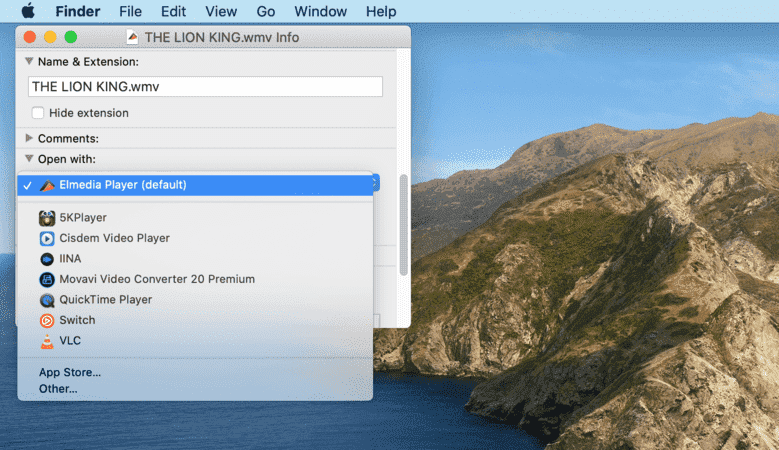
- Right-click on the video or audio file you want to open. Right-clicking or control-clicking can be done by tapping the trackpad with two fingers on a laptop.
- Then select Get Info.
- Next, clickOpen with. A bar will appear showing the current default player and other available video players you have installed.
- Change the app to VLC.
- Finally, click Change All… A prompt will appear. Select Continue.
What Is The Default Media Player In Mac

Note: This only sets VLC as the default player for the file format of the specific video or song you chose to open. If the video format is .mp4, other video files such as .mkv and .avi might still open with other players. You can repeat the steps above for other video and audio formats.
How to Make VLC the Default Player in Windows 10
There is more than one way to open your videos automatically on VLC. First, you can do it by going to Settings>Apps > DefaultApps. Then click the entry under Video Player and choose VLC. Or, you can also right-click the media file and select Other apps. Then choose VLC and tick the box next to “Always use this app…”
- Click the Start button. The Start button is the Windows logo in the bottom-left corner of your screen.
- Then click Settings. If you can’t find it, type “Settings” in the search bar and then click the result.
- Next, click Apps.
- Then click Default apps. You can find this in the left sidebar.
- Next, click the button under Video player. This might be labeled Movies & TV, or whatever your current default video player is.
- Select VLC from the list. You can also change your default audio player to VLC under Music player. The changes will be saved automatically .
Another way to do this is when opening a videoor audio file.
- Right-click on the file you want to open. If you are using a laptop, and right-click is not an option, tap the touchpad with two fingers or hold the Ctrl button while clicking.
- In the drop-down menu, hover your pointer over Open with, and select Choose another app.A list of apps will then appear.
- Choose VLC and tick the “Always use this app to open” box.
Note: This will only set VLC as the default player for the file format of the specific video or song you chose to open. If the video format is .mp4, other video files, such as .mkv and .avi files, will still open with other players. You can repeat the steps above for other video and audio formats.
If you like VLC, be sure to check out our list of the best Windows apps here.
Was this article helpful?
Related Articles
Macgo Mac Blu-ray Player has added itself Auto Play function, which means when you insert a disc into your Blu-ray drive, the player will automatically start and play. In order to make this whole process smoother, you'd better set Mac Blu-ray Player as default player on your Mac. Now I'll tell you how to do it.
Preparations you need to do:
- Mac OS X 10.6 - 10.11
- Intel Core2 Duo 2.4GHz processor or higher recommended
- 512 MB RAM or higher recommended
- 250 MB of free disk space
- Internal or external Blu-ray drive
- USB 2.0 or above
- FireWire 400 or above
- Internet Connection
- Apple remote
Free trial version of this powerful Blu-ray Player is now available on Macgo Official Download Center, or you can click here to download Mac Blu-ray Player, and then drag its icon to your Application folder.
After installing Mac Blu-ray Player, you can go to 'Launchpad' and click on its icon to launch the program. The simplified main interface will reduce certain misoperations. You can see a menu at the top of the interface. Click 'Check File Associations' under 'Tools'.
Then it will come up with a pop up window. You can choose some media formats which you want to play with Macgo Blu-ray player, then click 'Make Mac Blu-ray player my default player'.
Click 'OK' to continue. Then Macgo Mac Blu-ray Player will be your default player.
After you set Macgo Mac Blu-ray Player as your default player, you also need to enable Auto Play function to freely enjoy Blu-ray this player.
Open 'Preferences' under 'Mac Blu-ray Player'.Open 'Playback' and tick under 'Auto play when you insert a disc', and then click 'OK'.
Insert a Blu-ray disc into the drive and wait for the program automatically start and display the Blu-ray Menu. You can make some adjustments there or directly click 'Play Movie' to enjoy some Blu-ray time.
NOTE If the Blu-ray playback is unsuccessful, here are some tips for you.
 - Email us to support@macblurayplayer.com with detailed information of your device such as device model, build number, kernel version and else. Attach the log file would be better.
- Comment us on Macgo Facebook Page, reply to any post or send us a message.
 Macgo Mac Blu-ray Player Pro
 The first and best Blu-ray media player for Mac. Support Original Blu-ray Menu, ISO files, and BDMV folder, etc.
Mac DownloadBUY NOWBest Free Media Player Mac

Hot Tutorials
All Products
Popular Topics
Product Center
Sales Support
Company
Copyright © 2011-2020 Macgo International Limited All Rights Reserved. | Macgo EULA
Blu-ray Disc™, Blu-ray™, and the logos are trademarks of the Blu-ray Disc Association.
iPod ®,iPhone ®,iTunes ® and Mac ® are trademarks of Apple Inc., registered in the U.S. and other countries. Our software is not developed by or affiliated with Apple Inc.