
One of the aspects of the Mac that most users never even think about, is customization. This is in part Apple’s fault, since the main elements of OS X already come neatly organized and most of them have gorgeous graphics and icons. However, despite what many people think, OS X is highly customizable and allows users to change many of its elements.
Icons are of course, one of the design elements that every Mac user fancies changing every now and then. However, doing so usually requires you to buy applications like CandyBar, which makes the job super simple, but that comes at a high price.
To change an application icon Right-click the application, and select Properties from the pop-up menu. On the General tab, click the Browse button next to Icon Path. Select the desired icon, or browse to another location to select the icon. Copy the image you want to use as your icon. Ideally it should be 512x512 already. Choose Get Info on the file/folder/app in Finder Click on the Icon and you'll notice a blue outline on the icon - now press Command - V or choose Paste from the Edit menu.
- Icons in Mac OS X use the.icns format. These icons can be cut and pasted from one item in Mac OS X to another. To test this out we are going to create an empty folder on the desktop, but give it an.
- Don't forget to check out our main channel for more free how-to videos! Join us on Facebook http://www.Facebook.com/howtech.
Instead, let’s learn about a quite easy way to change the icon of any application on your Mac for free.
Here’s what you need to do.
Getting Your New Icon Ready
You can prepare your own icon files, but we’ll use a small piece of software to create ours, since it makes it extremely easy to do so and comes at no cost.
Step 1: Download and install the free version of Img2icns from this website. This is an app that allows you to turn any image into the .icns file required for this process. Once the installation is complete, open the app.
Important Note: Make sure the image file you plan to use is perfectly square. It is not required but will deliver better results.Step 2: With the application open, take your image file (Img2icns supports all the popular formats) and drag it to the application’s main panel as shown in the image below. Then click on the Icns button to the right of the app’s window. A dialog box will appear prompting you to choose where to save your new icon.
Do so and the new file will be saved and ready to use.
Changing An Application’s Icon
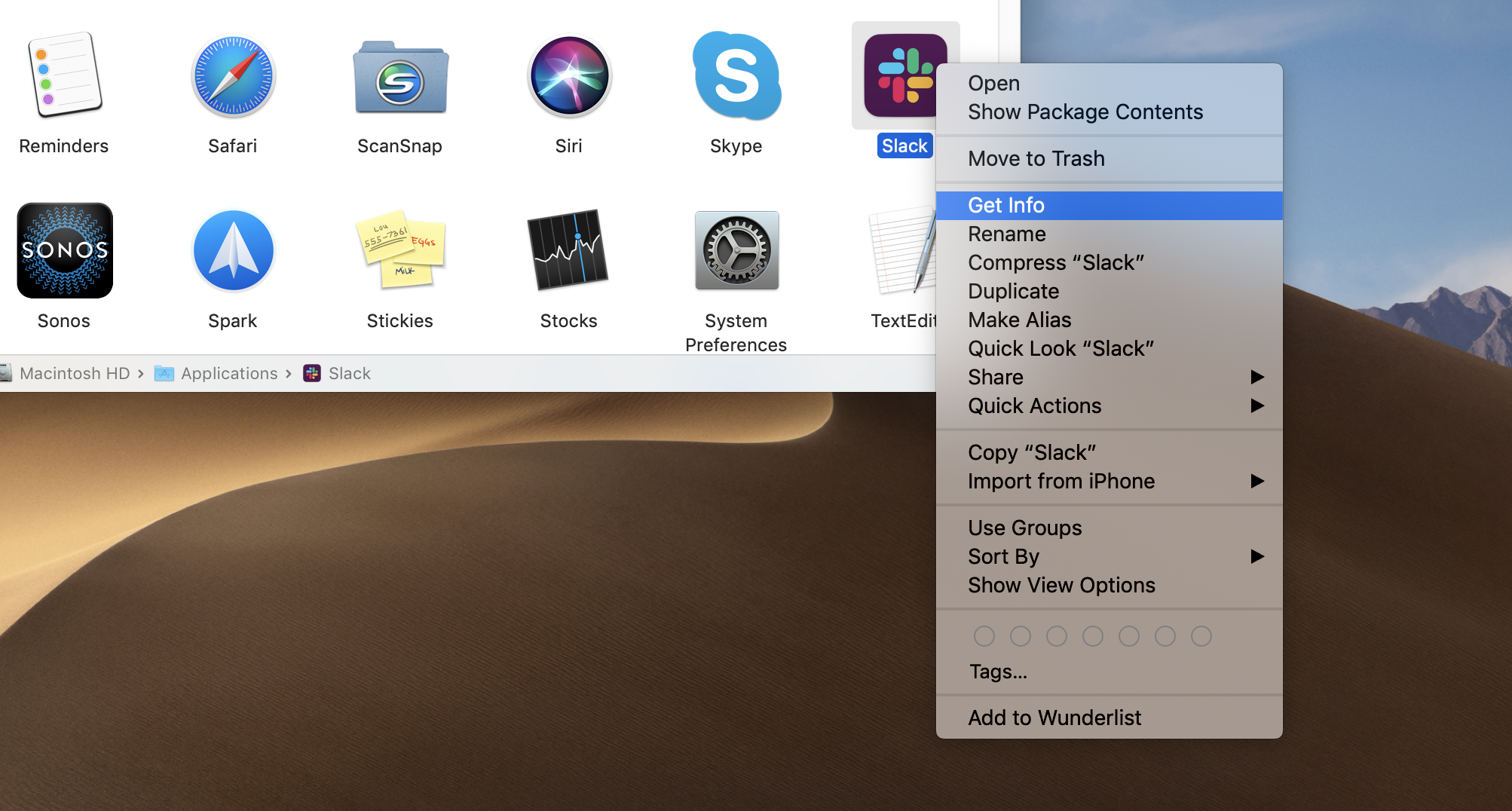
Step 3: In your Applications folder, find the app you want to change the icon of, right-click on it and choose the Show Package Contents option.
Step 4: A series of folders will be revealed. From them, open the Contents folder and in it, head to the Resources folder. Open that one as well.
Step 5: Inside the Resources folder scroll until you find the icon file for the application. It will be a .icns file. Copy the name before the extension and use it to rename the icon file you created with Img2icns. It is required that the new icon file retains the original name in order for this to work.
Important Note: If at some point you would like to return to the old icon of the application, you should save a copy of the file before overwriting it.Step 6: Once you are ready, simply drag the new icon file to the Resources folder and overwrite the original one. If you are required to introduce your user password, do so.
Step 7: In some cases the application icon will not change immediately. If this is the case for you, you might need to restart your Mac for the changes to take effect.
There you go. Now go and play with these icons!
The above article may contain affiliate links which help support Guiding Tech. However, it does not affect our editorial integrity. The content remains unbiased and authentic.Also See#design #OS X
Did You Know
The Fire TV Box is powered by a 64-bit MediaTek 8173C CPU.
More in Mac
Top 4 Ways to Fix Mac Desktop Icons Missing or Not Showing
After a few hours of work, a Finder window in icon mode can look something like a teenager’s room: stuff strewn all over the place, as demonstrated with the Applications folder in Figure 1.
Figure 1: Will someone please clean up this mess?
To restore order to your Desktop, click in any open area of the active window and then choose View –> Clean Up. This command leaves the icons in approximately the same position but snaps them to an invisible grid so that they’re aligned, as shown in Figure 2.

Figure 2: Tidying up is no problem with the Clean Up menu command.
After things are in alignment, work with the icon view options. (Naturally, you’ll want the active Finder window in icon view first, so choose View –> As Icons or press COMMAND+1.) From the Finder menu, choose View –> Show View Options — or press that swingin’ COMMAND+J shortcut — to display the View Options dialog box that you see in Figure 3. (Remember that these options are the ones available for icon view.)
Figure 3: The settings available for icon view.
Note these first two radio buttons, which also appear in the list View Options dialog box:
- This Window Only: Select the This Window Only radio button to apply the changes that you make only to the Finder window that opens when you open the selected item — in other words, the item that appears in the window’s title bar.
- For example, any changes made to the settings in Figure 3 will affect only the Applications folder because it was the active Finder window when you pressed COMMAND+ J. (You may have noticed that the window name also appears as the title of the View Options dialog box.)
Mac Desktop Icons
- All Windows: Select the All Windows radio button to apply the changes that you make to all Finder windows that you view in your current mode.
Of course, Mac OS X remembers the changes that you make within the View Options dialog box, no matter which view mode you’re configuring. You can also make other changes from this dialog box, including
- Resizing your Desktop icons: Click and drag the Icon Size slider to shrink or expand the icons on your Desktop. The icon size is displayed in pixels above the slider.
Find Applications On Mac
- Resizing icon label text: Click the up and down arrows to the right of the Text Size drop-down box to choose the font size (in points) for icon labels.
- Moving icon label text: Select either the Bottom (default) or the Right radio button to choose between displaying the text under your Desktop icons or to the right of the icons.
- Snap to Grid: Enable this check box to automatically align icons to a grid within the window, just as if you had used the Clean Up menu command.
- Show Item Info: With this check box enabled, Mac OS X displays the number of items within each folder in the window.
Change Icon For Macro
- Show Icon Preview: If you enable this check box, the Finder displays icons for image files using a miniature of the actual picture. (A cool feature for those with digital cameras — however, showing a preview does take extra processing time because Mac OS X has to load each image file and shrink it down to create the icon.)
- Keep Arranged By: To sort the display of icons in a window, enable this check box and choose one of the following criteria from its drop-down list: by name, date modified, date created, size, or item type.
- Choosing a background: To select a background for the window, select one of three radio buttons here:
• White: This is the default.
• Color: Click a color choice from the color block that appears if you make this selection.
• Picture: Select this radio button and then click the Select button to display a standard Open dialog box. Navigate to the location where the desired image is stored, click it once to select it, and then click Open.
Mac Application Icon Missing
After all your changes are made and you’re ready to return to work, click the dialog box’s Close button to save your settings.